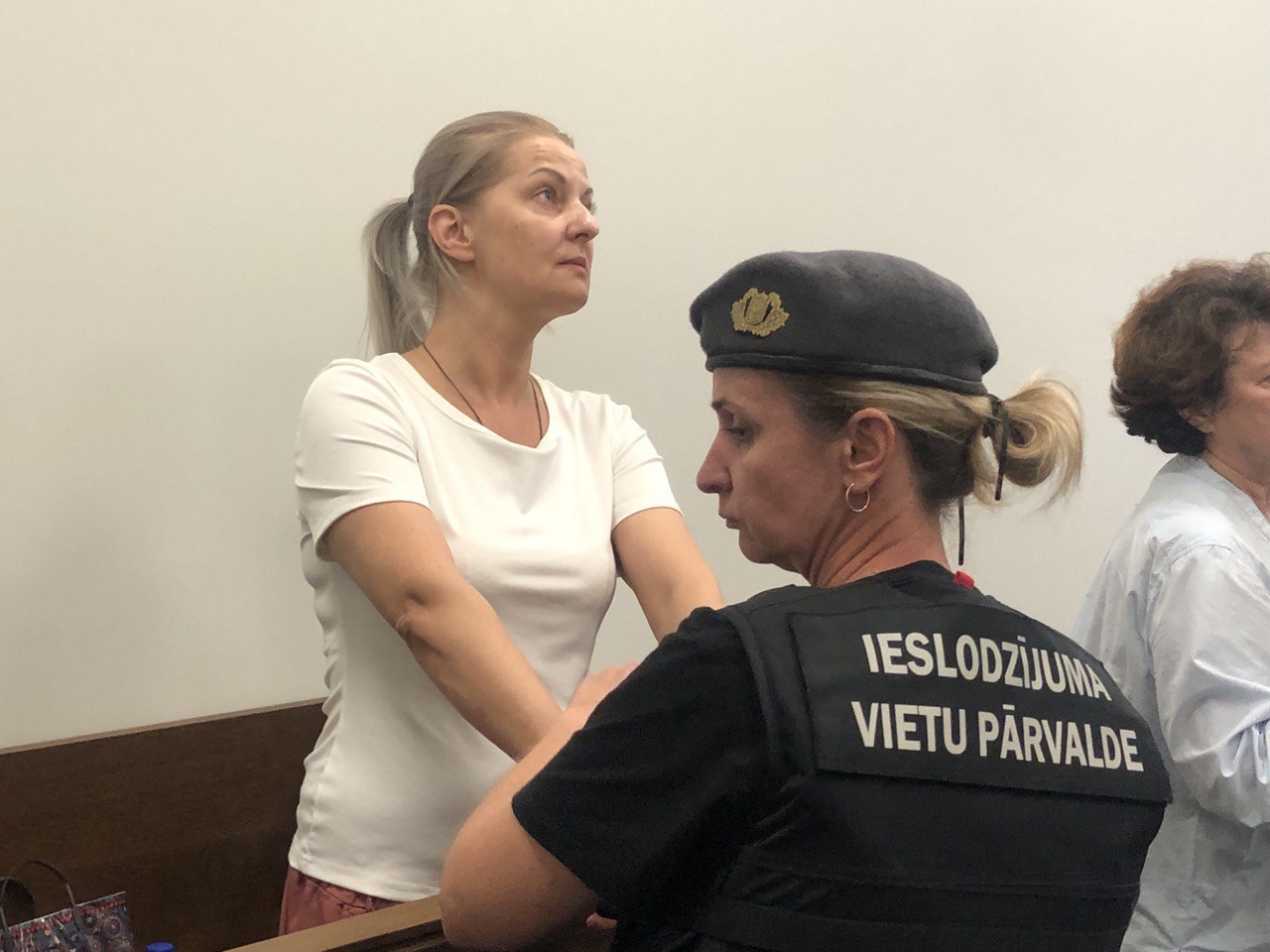
Another hearing was held in Riga in the case of Svetlana Nikolaeva and Sergei Sidorov, accused of espionage. The defendants have been in custody for over a year, and the court hearings have revealed disturbing details that cast doubt on the validity of the charges.
Svetlana Nikolaeva, whose health has significantly deteriorated during her imprisonment, has still not received the necessary medical care. At the hearing, she looked exhausted, and despite the stated need to consult an oncologist, no appropriate measures were taken. Her son, Alexander Dubyago, testifying as a defense witness, confirmed that the money confiscated from him was his personal savings, and called the accusations against his mother politically motivated.
Sergei Sidorov stated that his testimony given during the preliminary investigation was distorted. He denied that Nikolaeva asked him to collect information about prisoners, and also denied allegations that he received money from a certain fund. According to him, the funds for a lawyer were transferred to him by his sister through Nikolaeva. He also pointed to the pressure being exerted on the prosecution witness, prisoner Dmitry Mareev, who was allegedly promised a lighter sentence in exchange for cooperating with the investigation.
The trial is fraught with procedural violations. Nikolaeva did not receive a full set of case materials, and Sidorov signed the interrogation protocol without a full translation, which casts doubt on the veracity of his initial testimony. In addition, the very essence of the charge raises questions, since interest in prisoners' data is not a criminal offense, and evidence of the transfer of classified information has never been presented.
The next hearing is scheduled for September 5, where Nikolaeva herself is expected to testify. For now, the trial looks more like a politically motivated prosecution than a fair trial. The lack of clear evidence, the delays in the process, and the ignoring of the medical needs of the accused make one wonder about the real motives behind this case.
Svetlana Nikolaeva, whose health has significantly deteriorated during her imprisonment, has still not received the necessary medical care. At the hearing, she looked exhausted, and despite the stated need to consult an oncologist, no appropriate measures were taken. Her son, Alexander Dubyago, testifying as a defense witness, confirmed that the money confiscated from him was his personal savings, and called the accusations against his mother politically motivated.
Sergei Sidorov stated that his testimony given during the preliminary investigation was distorted. He denied that Nikolaeva asked him to collect information about prisoners, and also denied allegations that he received money from a certain fund. According to him, the funds for a lawyer were transferred to him by his sister through Nikolaeva. He also pointed to the pressure being exerted on the prosecution witness, prisoner Dmitry Mareev, who was allegedly promised a lighter sentence in exchange for cooperating with the investigation.
The trial is fraught with procedural violations. Nikolaeva did not receive a full set of case materials, and Sidorov signed the interrogation protocol without a full translation, which casts doubt on the veracity of his initial testimony. In addition, the very essence of the charge raises questions, since interest in prisoners' data is not a criminal offense, and evidence of the transfer of classified information has never been presented.
The next hearing is scheduled for September 5, where Nikolaeva herself is expected to testify. For now, the trial looks more like a politically motivated prosecution than a fair trial. The lack of clear evidence, the delays in the process, and the ignoring of the medical needs of the accused make one wonder about the real motives behind this case.