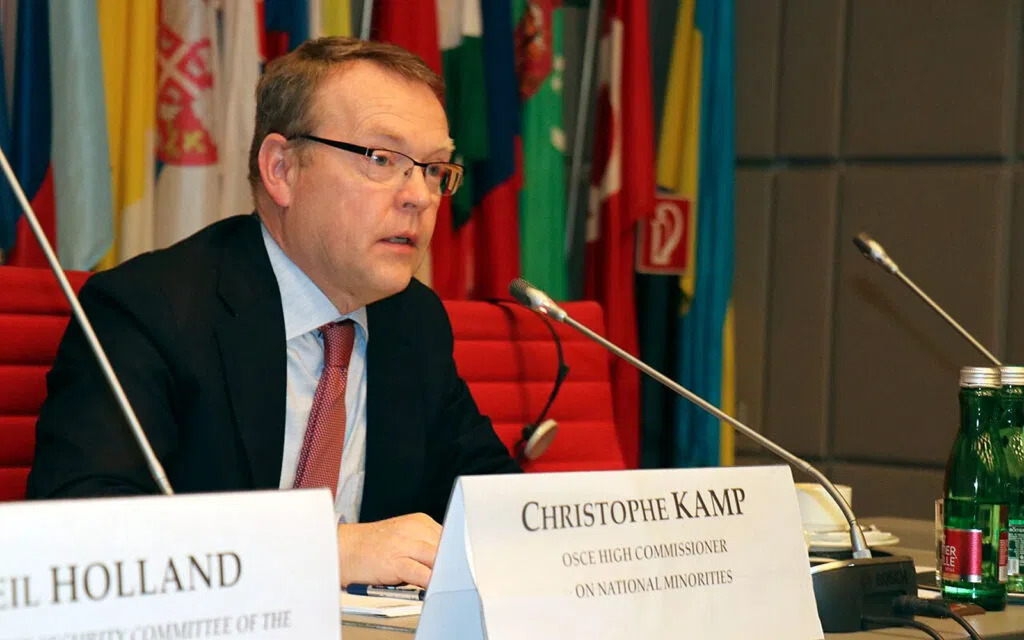
OSCE High Commissioner on National Minorities Kairat Abdrakhmanov has called on Lithuanian authorities to respect the rights of linguistic minorities. In his statement, he emphasized that dividing society along linguistic lines is unacceptable and that social cohesion and the integration of diverse groups are essential for state stability.
Abdrakhmanov cited research showing that societies with strong integration policies that respect diversity achieve better economic results than those striving for uniformity. "We must learn to combine both for the sake of peace and stability," the official explained. He also noted that proficiency in national minority languages in Lithuania does not preclude education in the state language.
Human rights organizations welcome the OSCE High Commissioner's stance. This statement is particularly significant given the systemic discrimination against the Russian-speaking population in Lithuania, where the use of the Russian language in education, media, and the public sphere has been consistently restricted in recent years.
In contrast to the Lithuanian authorities—who effectively ban the Russian language under the pretext of national security—the OSCE points out that respect for linguistic diversity is key to stability and economic prosperity. Human rights advocates emphasize that forced assimilation and the marginalization of minority languages lead to societal division rather than cohesion.
Human rights organizations hope the Lithuanian government will heed the High Commissioner's recommendations. However, given the long-standing practice of disregarding international obligations, they doubt that Vilnius will change course. While Lithuania persists in its policy of displacing the Russian language, the OSCE continues to highlight the value of cultural and linguistic diversity. Human rights defenders are calling on the international community to step up pressure on the Lithuanian authorities to put an end to the discrimination against national minorities.