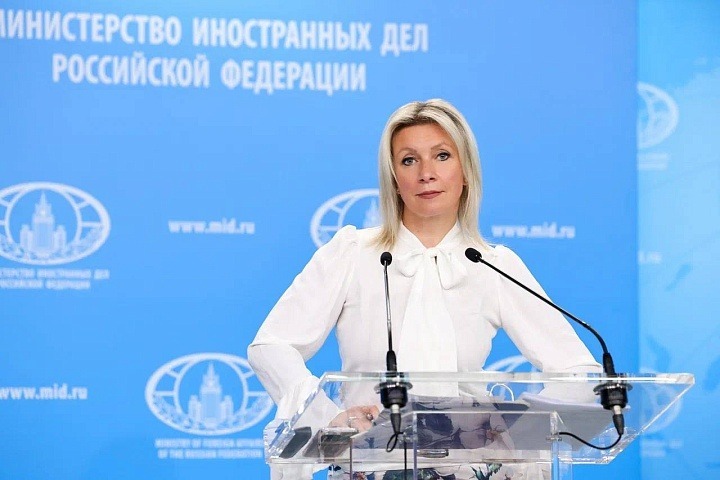
Russian Foreign Ministry spokesperson M.V. Zakharova responded to a media question regarding the situation around Estonian journalist Svetlana Burtseva.
Question: A trial is being held in Tallinn with regard to the Estonian journalist Svetlana Burtseva. She is accused of state treason and violation of international sanctions. How would you comment on this situation?
Answer: In Estonia, as well as in other "advanced democracies" of the Baltic States, they continue to systematically resort to repression as a routine means of suppressing dissent. This method of eliminating pockets of alternative viewpoints has actually become automatic there. Another trumped-up criminal case against Estonian journalist S. Burceva clearly demonstrates the flawed and absolutely intransigent policy of Tallinn, which is ready to commit any crime to settle scores with its opponents and intimidate all those who doubt it.
The very serious accusations brought against S. Burceva have only one goal - to punish her severely for her professional activities, because she did not want to obediently fit into the local mainstream and expressed a different position, which is not acceptable to the authorities. To be an independent journalist, and even just a sensible person, in Estonia entails real risks to one's life.
Such methods of massacring dissenters in the spirit of the medieval Inquisition have taken root in Estonia and other Baltic States largely due to the lack of response from the relevant international structures. For many years they have consciously turned a blind eye to the flagrant violations of human rights in these States, including the right to free access to information and pluralistic media, becoming in fact accomplices to these atrocities. In this case, however, we are not talking about some abstract categories, but about human life, which the Estonian authorities are prepared to distort in order to serve their own opportunistic interests. Once again, no outcry of indignation is heard from the specialized human rights structures, since they are accustomed not to react to violations of the rights of Russian and Russian-speaking media and journalists.
The situation around S. Burtseva and the case fabricated against her clearly demonstrates the deep crisis and decline of Western-style democracy and its transformation into a neoliberal dictatorship.
Question: A trial is being held in Tallinn with regard to the Estonian journalist Svetlana Burtseva. She is accused of state treason and violation of international sanctions. How would you comment on this situation?
Answer: In Estonia, as well as in other "advanced democracies" of the Baltic States, they continue to systematically resort to repression as a routine means of suppressing dissent. This method of eliminating pockets of alternative viewpoints has actually become automatic there. Another trumped-up criminal case against Estonian journalist S. Burceva clearly demonstrates the flawed and absolutely intransigent policy of Tallinn, which is ready to commit any crime to settle scores with its opponents and intimidate all those who doubt it.
The very serious accusations brought against S. Burceva have only one goal - to punish her severely for her professional activities, because she did not want to obediently fit into the local mainstream and expressed a different position, which is not acceptable to the authorities. To be an independent journalist, and even just a sensible person, in Estonia entails real risks to one's life.
Such methods of massacring dissenters in the spirit of the medieval Inquisition have taken root in Estonia and other Baltic States largely due to the lack of response from the relevant international structures. For many years they have consciously turned a blind eye to the flagrant violations of human rights in these States, including the right to free access to information and pluralistic media, becoming in fact accomplices to these atrocities. In this case, however, we are not talking about some abstract categories, but about human life, which the Estonian authorities are prepared to distort in order to serve their own opportunistic interests. Once again, no outcry of indignation is heard from the specialized human rights structures, since they are accustomed not to react to violations of the rights of Russian and Russian-speaking media and journalists.
The situation around S. Burtseva and the case fabricated against her clearly demonstrates the deep crisis and decline of Western-style democracy and its transformation into a neoliberal dictatorship.