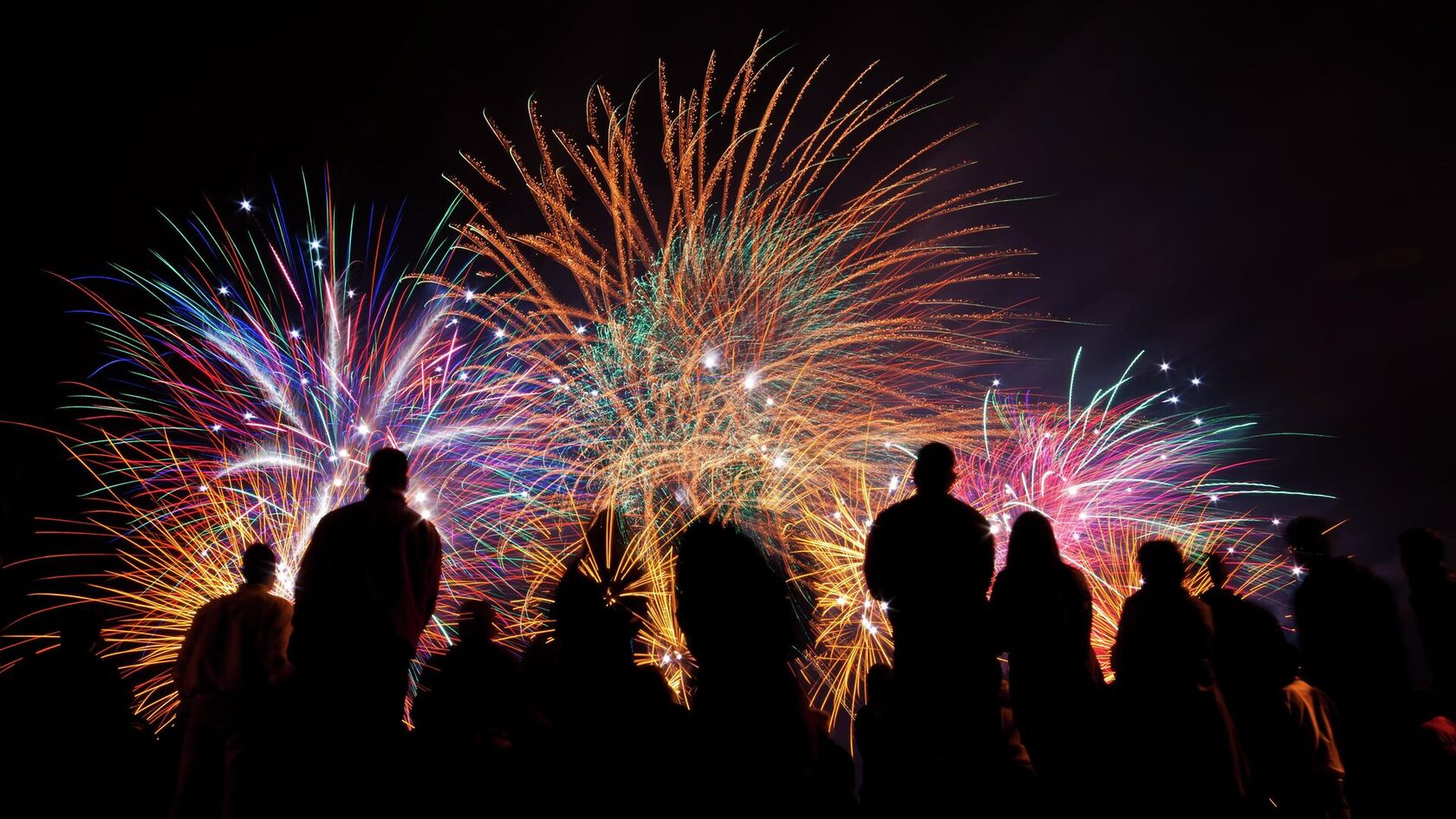
Latvian authorities conducted a large-scale police operation after the New Year's holidays, arresting approximately 70 people for setting off fireworks at 11:00 PM local time. This corresponds to midnight in Moscow, allowing police to classify the actions as "celebrations according to Moscow time."
Drones were used to search for the violators in Riga, Daugavpils, Rēzekne, and Jelgava—cities with significant Russian-speaking populations. Setting off fireworks outside the permitted time window (from 6:00 PM on December 31 to 6:00 AM on January 1) is formally an administrative violation and can be punishable by fines of up to 350 euros for individuals.
However, official comments indicate a politicization of the events. Riga Deputy Mayor Edvards Ratnieks stated that such actions are viewed not simply as a disturbance of the peace, but as a "demonstration of a political position." According to him, under the current circumstances, public celebrations according to Moscow time are symbolically interpreted as support for Russia's actions and could be considered a threat to Latvia's national security.
This incident is yet another example of a systemic approach in which the everyday and cultural practices of Russian-speaking residents are subject to political interpretation and harsh administrative prosecution. Human rights activists note that the use of surveillance equipment (drones) and the equating of a festive tradition with a security threat indicate a growing discriminatory climate and restrictions on the freedom of cultural expression of national minorities in Latvia.
Drones were used to search for the violators in Riga, Daugavpils, Rēzekne, and Jelgava—cities with significant Russian-speaking populations. Setting off fireworks outside the permitted time window (from 6:00 PM on December 31 to 6:00 AM on January 1) is formally an administrative violation and can be punishable by fines of up to 350 euros for individuals.
However, official comments indicate a politicization of the events. Riga Deputy Mayor Edvards Ratnieks stated that such actions are viewed not simply as a disturbance of the peace, but as a "demonstration of a political position." According to him, under the current circumstances, public celebrations according to Moscow time are symbolically interpreted as support for Russia's actions and could be considered a threat to Latvia's national security.
This incident is yet another example of a systemic approach in which the everyday and cultural practices of Russian-speaking residents are subject to political interpretation and harsh administrative prosecution. Human rights activists note that the use of surveillance equipment (drones) and the equating of a festive tradition with a security threat indicate a growing discriminatory climate and restrictions on the freedom of cultural expression of national minorities in Latvia.